READ MOREBlackness is Blooming Symposium report
Blackness is Blooming was a symposium held at Zeitz Mocaa that delved into the complex experiences of exile and the aftermath of displacement as explored in the exhibition A Protea Is Not a Flower.READ MOREFilm Screening: Aquila, J.M. Coetzee and The Jesus Trilogy
The CHR welcomed J.M. Coetzee on his visit to the CHR’s Iyatsiba Lab and was proud to host the screening of Aquila, a film by Callum Chiplin and Jade Harris-Tyler, based on Coetzee’s The Jesus Trilogy.READ MOREOpen Call: The Cape Town Workshop
We are delighted to announce that applications are now open for a fully funded 12-day research and practice-led programme of workshops, discussions, and encounters with historical archives and contemporary practice in July 2027.
We are delighted to announce that the Centre for Humanities Research and the W. E. B. Du Bois Centre at the University of Massachusetts have recently signed a Memoranda of Understanding.
The African Critical Inquiry Programme is pleased to announce the 2026 Ivan Karp Doctoral Research Awards to support African doctoral students in the humanities and humanistic social sciences and invites proposals from scholars and/or practitioners in public cultural institutions in South Africa to organise a workshop to
take place in 2027. ACIP is a partnership between the Centre for Humanities Research at the University of the Western Cape and the Laney Graduate School of Emory University in Atlanta, Georgia (USA).
The Centre for Humanities Research at the University of the Western Cape adds its voice to many others who are deeply concerned about the cancellation of Gabrielle Goliath’s Elegy that was officially selected for the South African Pavilion at the Venice Biennale of 2026.
The African Critical Inquiry Programme (ACIP) is pleased to announce that the 2026 ACIP Workshop will be Revisiting and Reimagining “Imvo Zabantsundu”.
Lester Kiewit speaks to Premesh Lalu, a UWC research professor, on the lessons we can learn from the Trojan Horse Massacre in 1985, as well as the misconceptions about those at grassroots level fighting the apartheid machine with intellect and limited resources.
The UK-SA Chair in Digital Humanities, held by Prof. Premesh Lalu, is welcoming international scholars to Cape Town in November to attend a three-day roundtable at Iyatsiba Lab in Woodstock.
We are delighted to announce that SA/UK Digital Humanities PhD fellow, Siyanda Kobokana, has been selected for the inaugural Paris Doctoral Research Residency at IFAS–Fondation Fiminco–ArTeC.
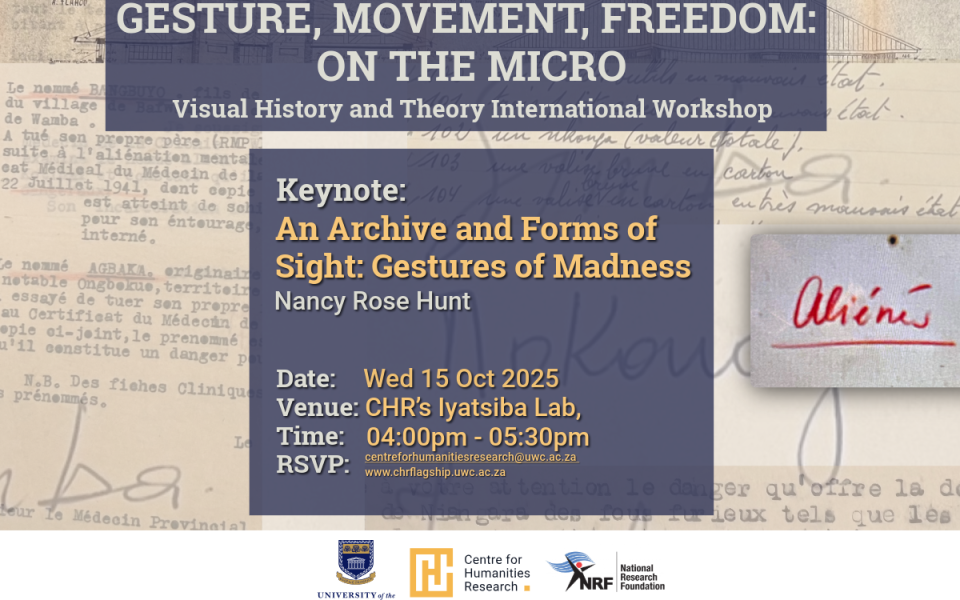
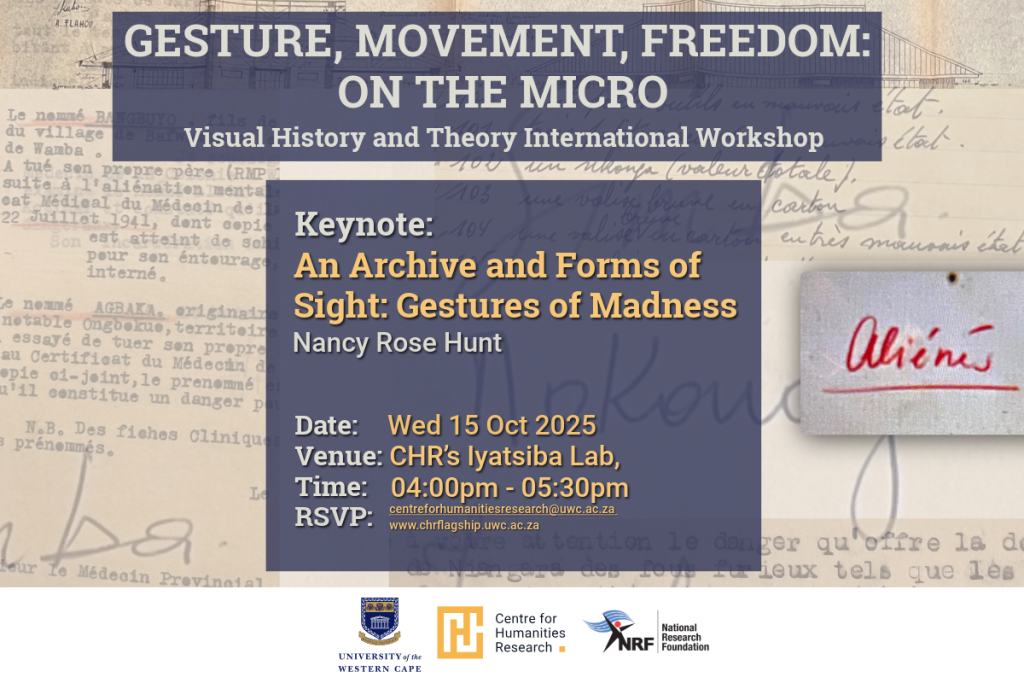
My history of madness in the Belgian Congo will rely on tracking transactional, micro, and urgent documents as gestures. These promise to open “spheres of ethos,” with human riddles, forms of upheaval, and violence (Agamben 1992).
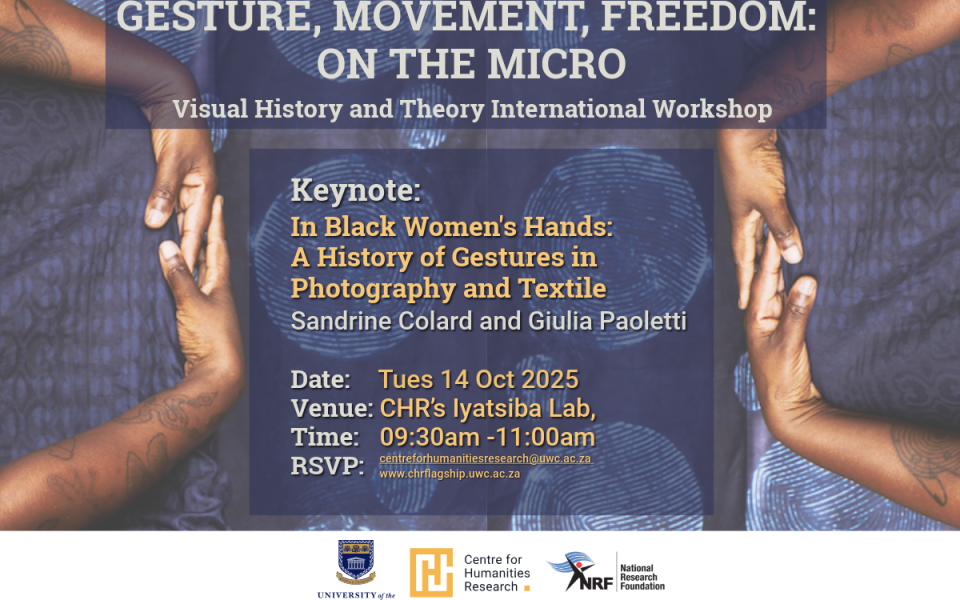
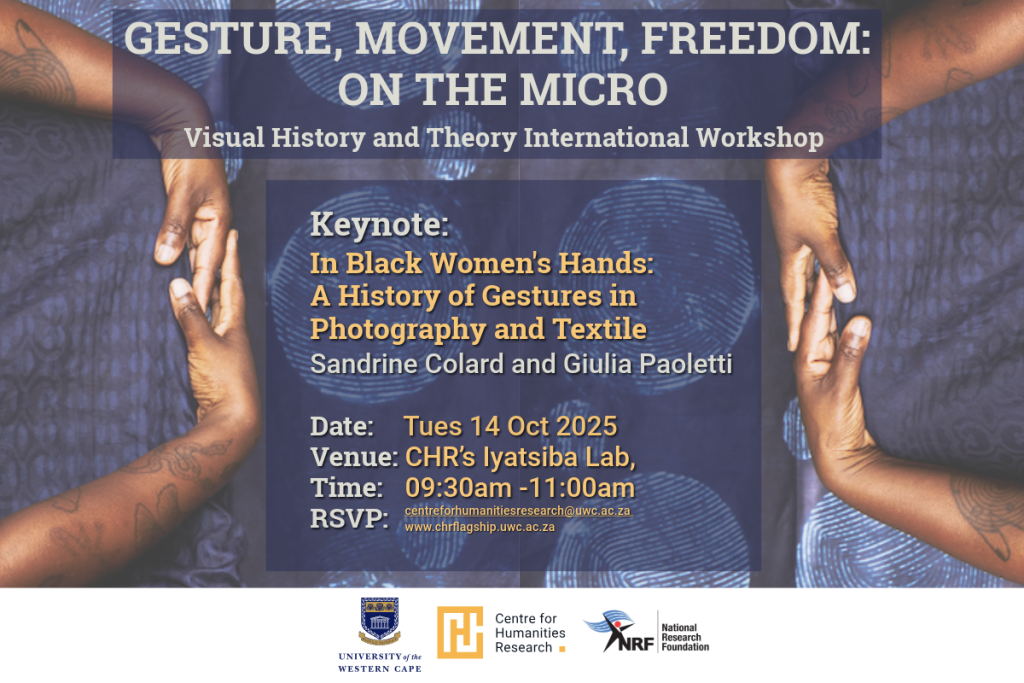
Contemporary Black female artists have reclaimed the everyday labor and domestic motions women have historically performed, as artistic gestures in their own right. For example, the ceramic and bronze sculptures of the African-American artist Simone Leigh have referenced vernacular processes like washing chores and needlework.
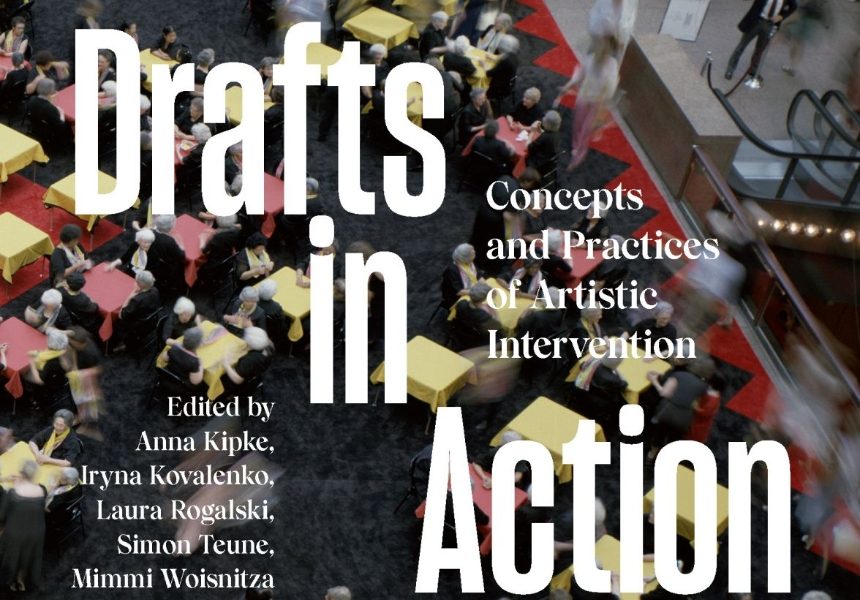
In April 1964, the Irish Anti-Apartheid Movement (IAAM) was launched in Dublin by Kader Asmal, a South-African professor of law in Trinity College. Lobbying for improved human rights and liberation in South Africa, the Movement raised awareness of the racism experienced by communities and campaigned for the release of political prisoners.
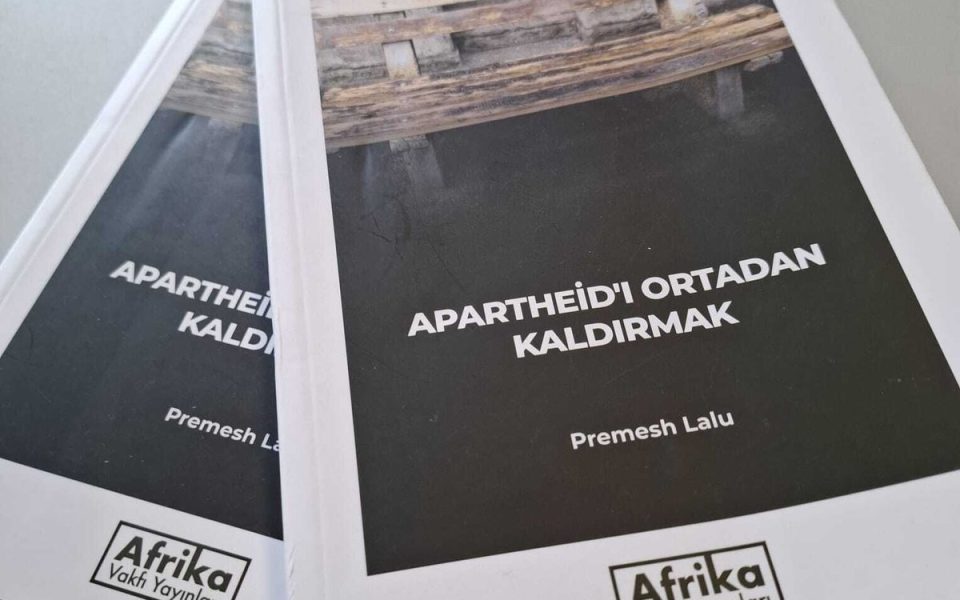
We are delighted to announce that Undoing Apartheid by Premesh Lalu has been translated into Turkish and published by Afrika Vakfi Yayinevi. See below for more information about Undoing Apartheid and its Turkish translation, Apartheid’ı Ortadan Kaldırmak.