READ MOREHumanities in Sesssion: ‘Returning Transitions: Memories of Persistent Crises in South African and Russian Writing’, with Ksenia Robbe
In this seminar, Ksenia Robbe present the key questions and theoretical propositions concerning the possibility of reading comparatively and connectively memories of the post-apartheid and post-Soviet ‘transitions’ in contemporary South African and Russian writing. READ MOREArchive Lab: 'Archiving Resistance: The VNS/AFRAVISION Collective', with Brian Tilley and Makonenyana Molete
The New Archival Visions (NAV) Programme will host Brian Tilley and Makonenyana Molete, founder members of the VNS/Afravision video collective to share how they set up VNS/Afravision in the 1980s to document the struggles sweeping across South Africa.READ MOREWinter School 2026: Liminalities: Thinking, Thresholds
Liminality has been theorised as a condition of transition. Whether in its original anthropological form as a movement from one state to another through a rite of passage or in its postcolonial rendering via Homi Bhabha's notion of hybridity, liminality has come to mark a condition of being “not quite” and “not yet.”
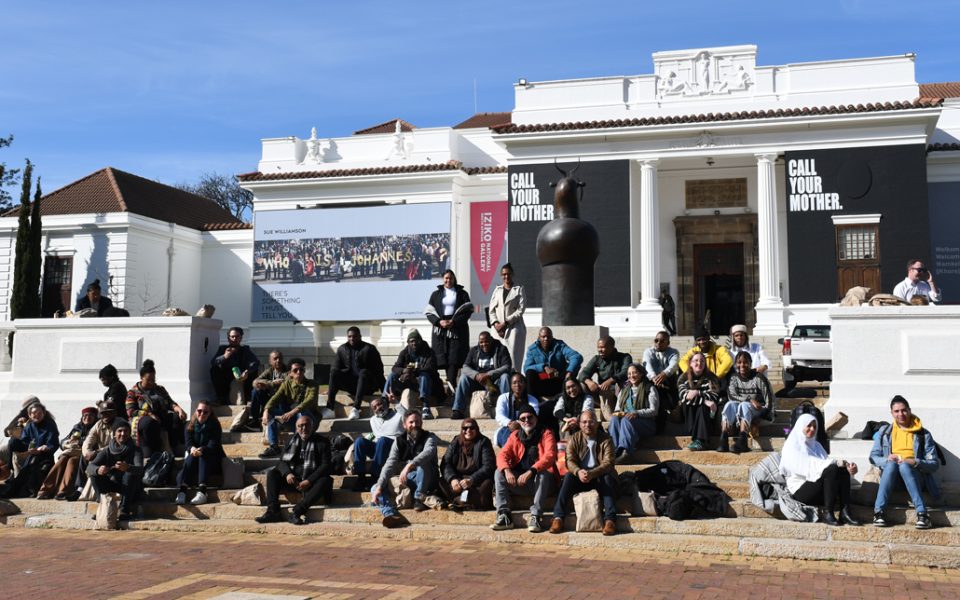
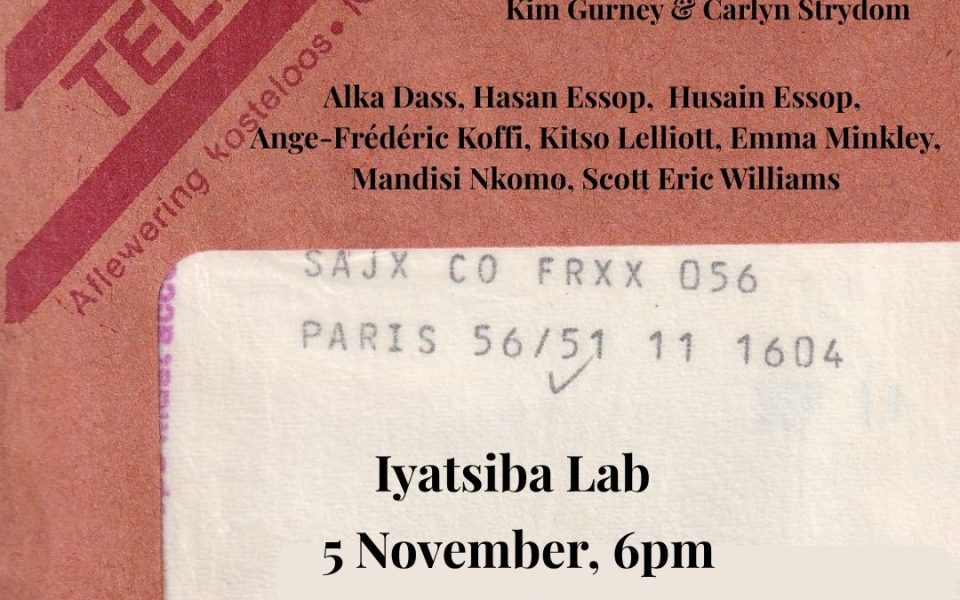
The UK-SA Chair in Digital Humanities, held by Prof. Premesh Lalu, is welcoming international scholars to Cape Town in November to attend a three-day roundtable at Iyatsiba Lab in Woodstock.
We are delighted to announce that SA/UK Digital Humanities PhD fellow, Siyanda Kobokana, has been selected for the inaugural Paris Doctoral Research Residency at IFAS–Fondation Fiminco–ArTeC.
My history of madness in the Belgian Congo will rely on tracking transactional, micro, and urgent documents as gestures. These promise to open “spheres of ethos,” with human riddles, forms of upheaval, and violence (Agamben 1992).
Contemporary Black female artists have reclaimed the everyday labor and domestic motions women have historically performed, as artistic gestures in their own right. For example, the ceramic and bronze sculptures of the African-American artist Simone Leigh have referenced vernacular processes like washing chores and needlework.
In April 1964, the Irish Anti-Apartheid Movement (IAAM) was launched in Dublin by Kader Asmal, a South-African professor of law in Trinity College. Lobbying for improved human rights and liberation in South Africa, the Movement raised awareness of the racism experienced by communities and campaigned for the release of political prisoners.
We are delighted to announce that Undoing Apartheid by Premesh Lalu has been translated into Turkish and published by Afrika Vakfi Yayinevi. See below for more information about Undoing Apartheid and its Turkish translation, Apartheid’ı Ortadan Kaldırmak.
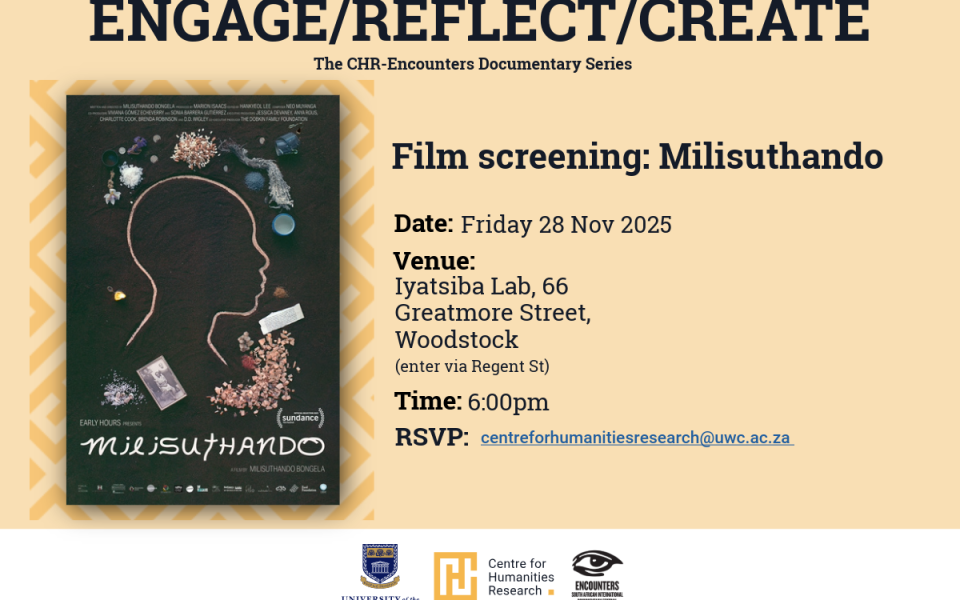
Join us for a screening of Dublin Short a short documentary capturing the magic of the Little Museum of Dublin's famous guided tour. The screening will be followed by a Q&A with Dr Daryl Hendley Rooney, deputy curator at the Little Museum and visiting researcher on the Charlotte Maxeke-Mary Robinson Research Chair.
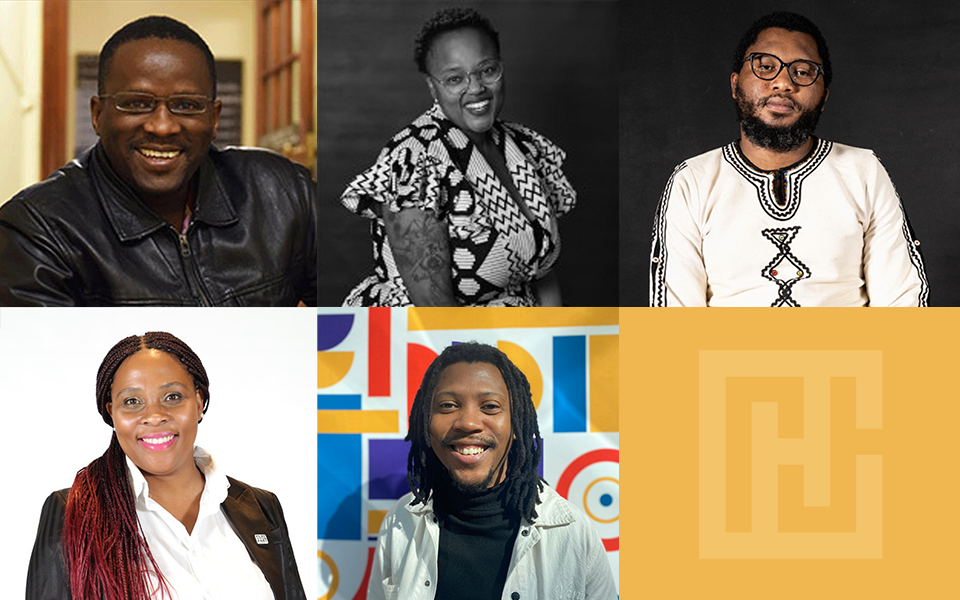
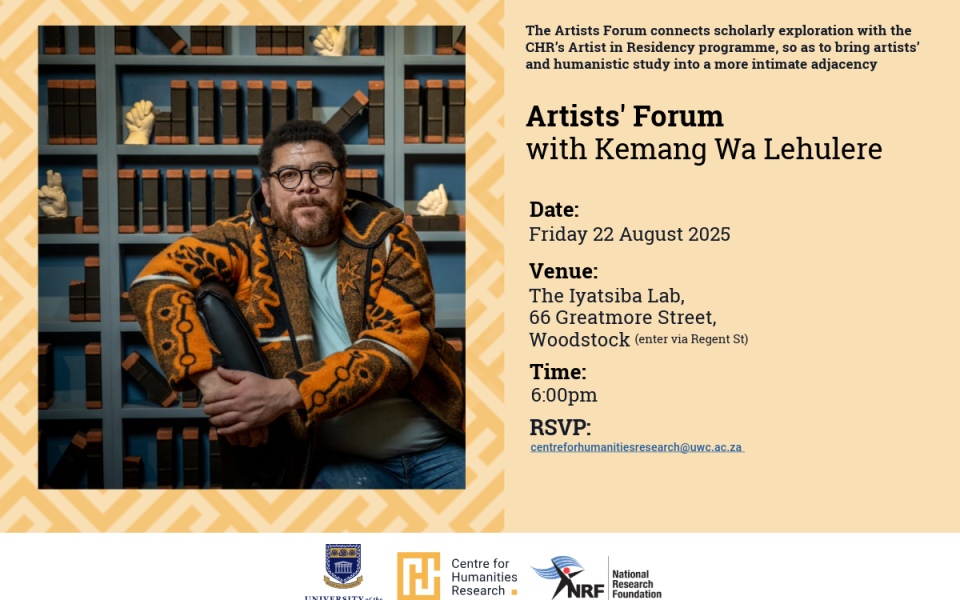
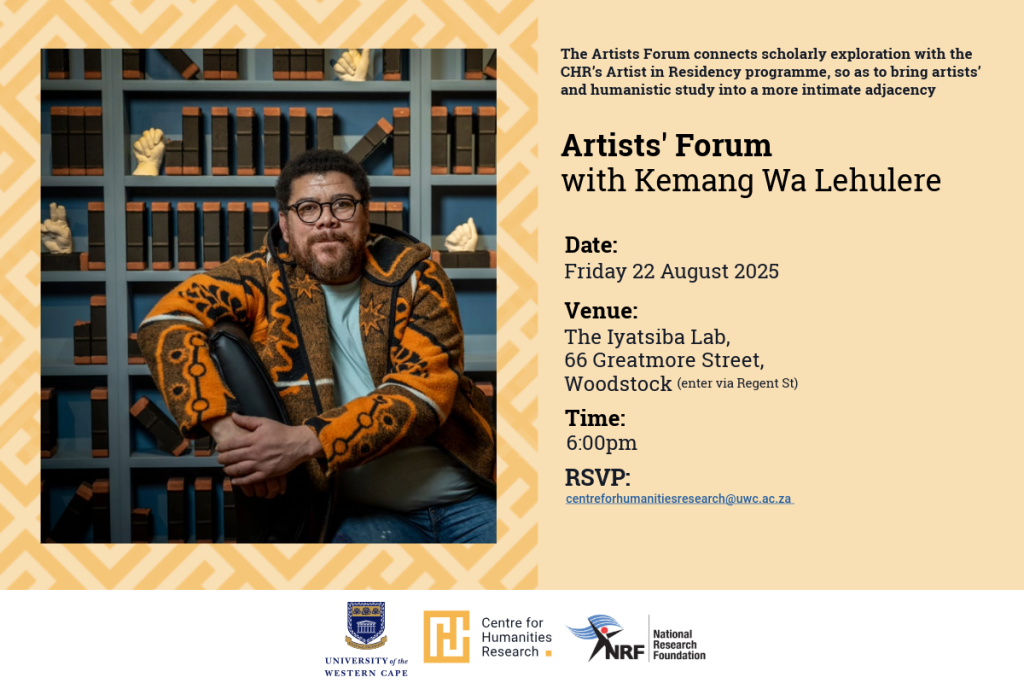
The Artists Forum, convened at the Centre for Humanities Research, emerges out a longstanding conversation between artists and academics working in and through the CHR.
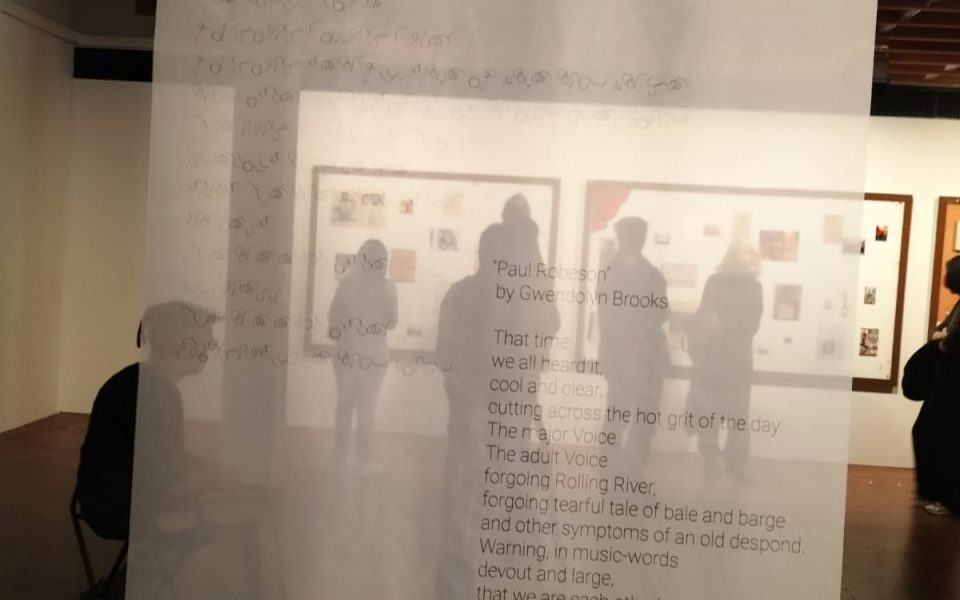
Lauren van der Rede is currently a Lecturer in the Department of English at Stellenbosch University, South Africa, and is the PI of the Perforated Memory research project.
The New Archival Visions (NAV) programme at the Centre for Humanities Research (CHR), University of the Western Cape (UWC), is offering fellowships for the remainder of 2025. Funding support comes from the Department of Higher Education and Training (DHET).