READ MOREHumanities in Sesssion, Artists’ Forum: Underwater Cables & Global Digital Infrastructure
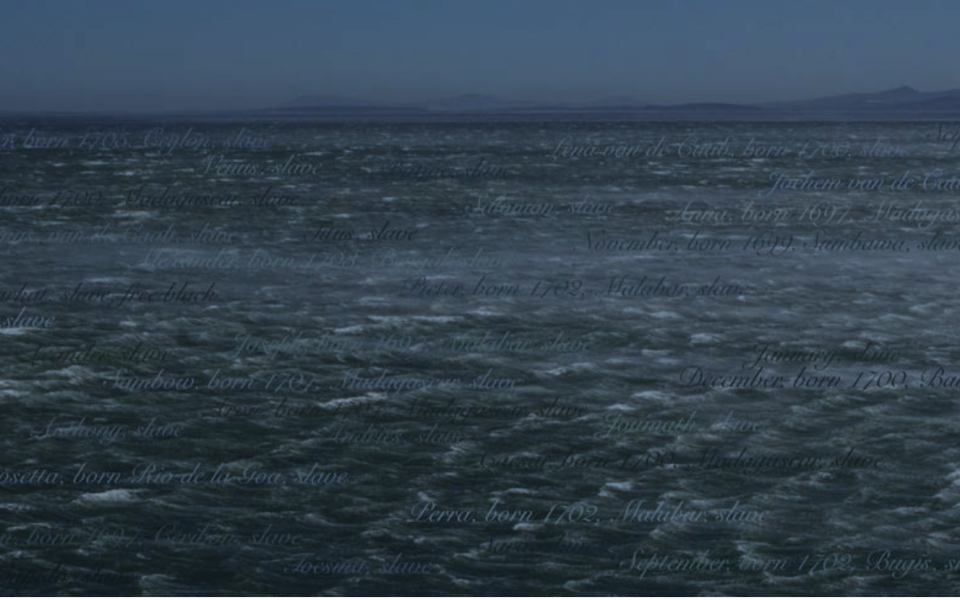
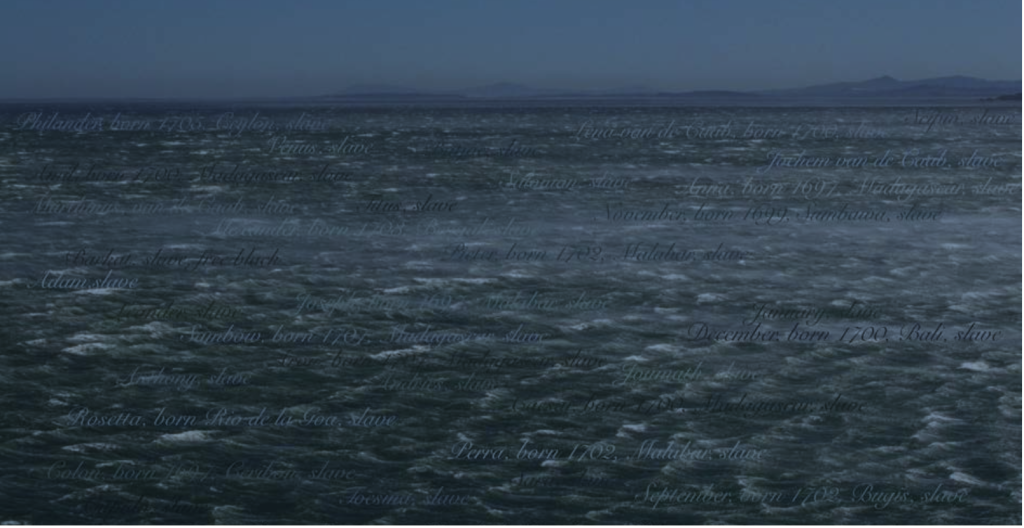
This session, titled ‘Underwater Cables & Global Digital Infrastructure’, will be led by Ian Purnell, and Southbound Studio members, Kamil Adam Hassim, and Benji Anstey, who will be in conversation with the CHR’s Premesh Lalu.READ MOREInternational Workshop in Visual History and Theory, 2026 Book and Exhibition Launch: Makuapis
The CHR will be hosting its annual International Workshop in Visual History & Theory at Iyatsiba Lab on 16-17 October 2026, in partnership with Université-Paris-8, on the theme of 'Looking Together.' Migration, solidarity and mobility across time and space are key themes. This workshop includes a series of panels and lectures, and coincides with the launch of an exhibition, Makuapis, on Thursday 15 October at...READ MOREInternational Workshop in Visual History and Theory, 2026, Keynote lecture by Zeynep Devrim Gürsel
The CHR will be hosting its annual International Workshop in Visual History & Theory at Iyatsiba Lab on 16-17 October 2026, in partnership with Université-Paris-8, on the theme of 'Looking Together.' Migration, solidarity and mobility across time and space are key themes. The workshop includes a public keynote lecture by Zeynep Gürsel which will address border surveillance photography.
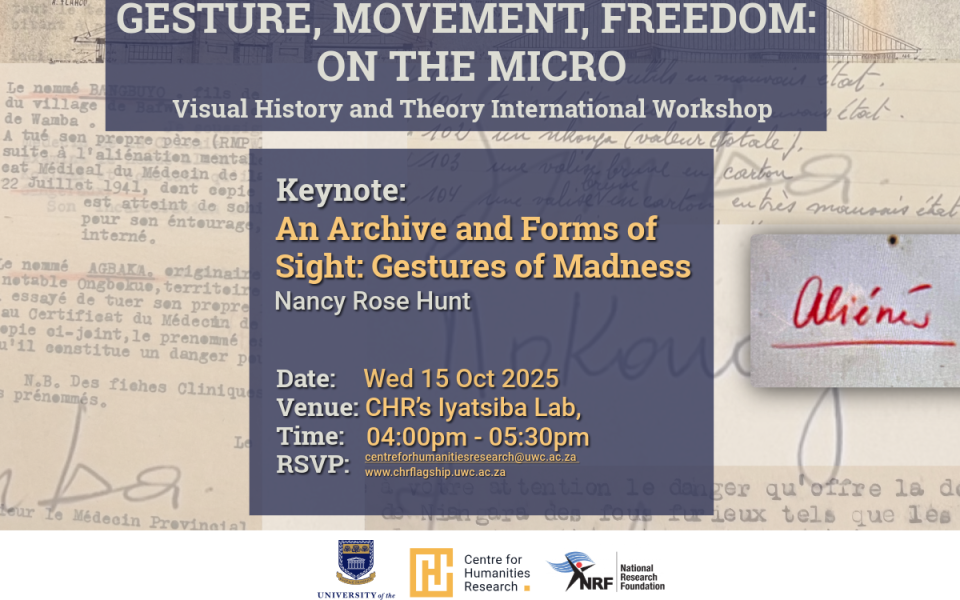
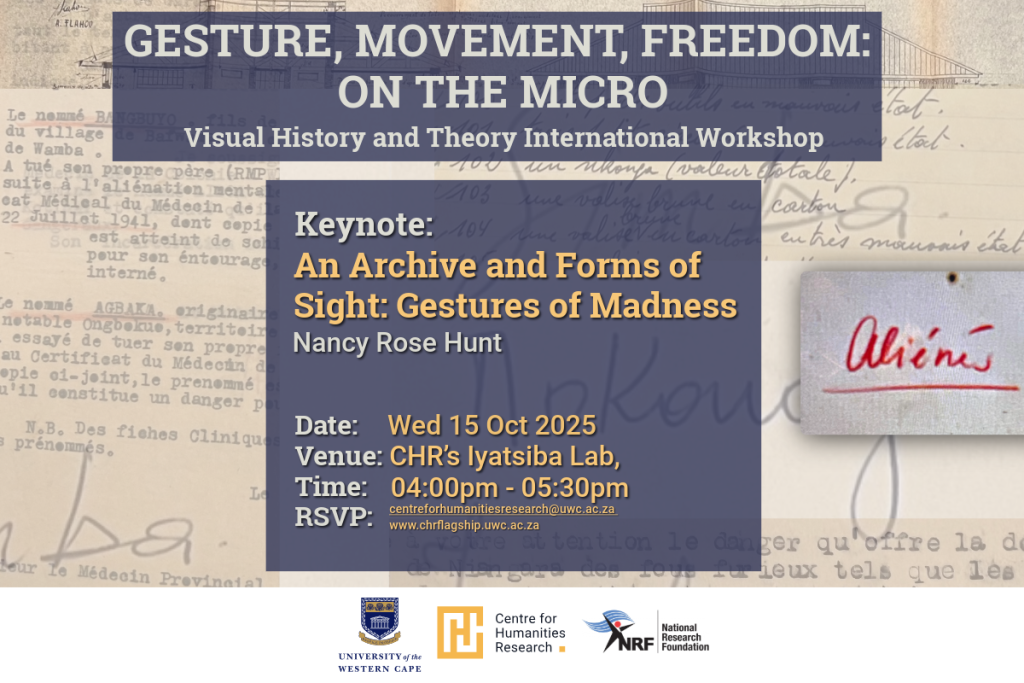
My history of madness in the Belgian Congo will rely on tracking transactional, micro, and urgent documents as gestures. These promise to open “spheres of ethos,” with human riddles, forms of upheaval, and violence (Agamben 1992).
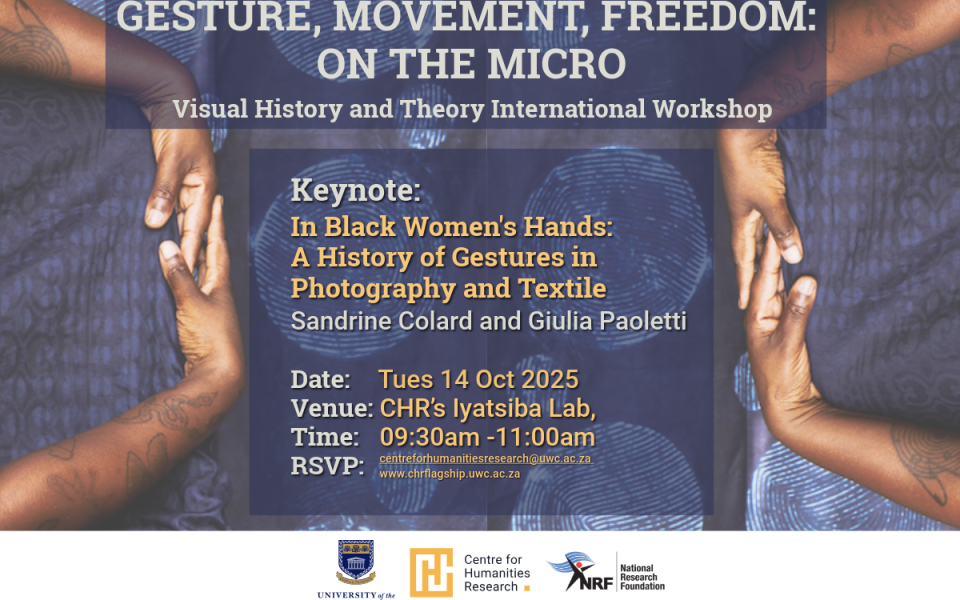
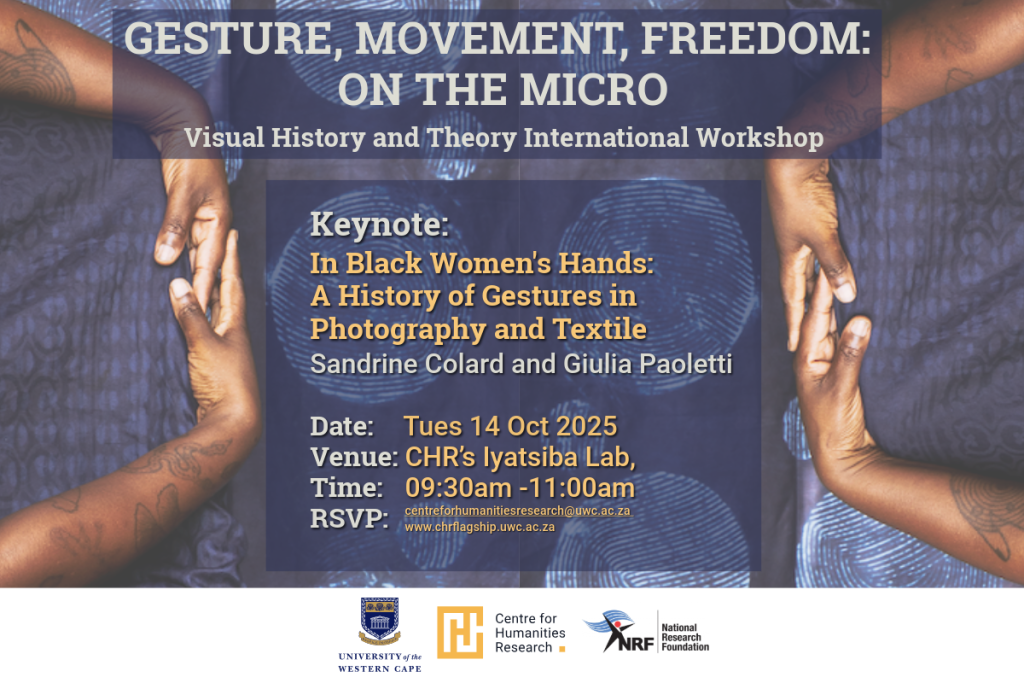
Contemporary Black female artists have reclaimed the everyday labor and domestic motions women have historically performed, as artistic gestures in their own right. For example, the ceramic and bronze sculptures of the African-American artist Simone Leigh have referenced vernacular processes like washing chores and needlework.
Abstracts are invited for participation in the annual workshop in Visual History & Theory to be held at the Centre for Humanities Research, University of the Western Cape, on 19-20 September 2024.
While an elusive concept, neoliberalism has come to denote a set of economic policies and principles grounded on individualism, market deregulation, and extensive privatisation.
The CHR encourages the call for papers for the Transience and the image workshop to be convened from th1 19-20 August 2022 at the Centre for Humanities Research.
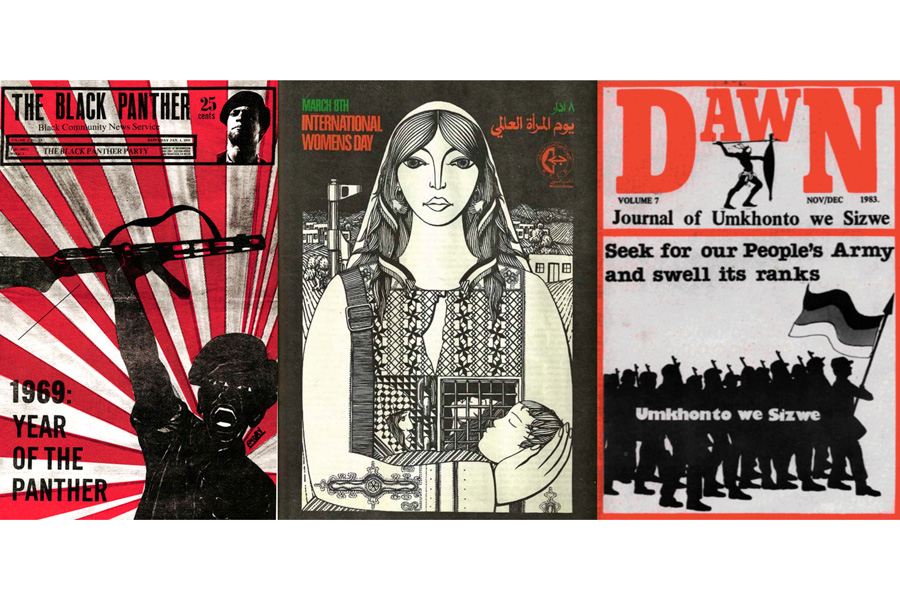
The workshop will examine 20th century periodicals and related print ephemera – including newspapers, cultural and literary journals, magazines, manifestoes, newsletters and political pamphlets – as sites of Left, anti-imperial and anti-colonial critical production throughout decolonization, anti-Apartheid struggles, and the post-colonial era.