chr 500-0bCHR Dark Textchr 500-0bchr 500-0b
  • About
    • Centre for Humanities Research
    • DSI-NRF Flagship
    • Partnerships
    • Funders
    • Reports
    • Staff
  • Iyatsiba Lab
    • LoKO
    • Sound Working Group
    • Documentary film
  • New Archival Visions
  • Research Platforms
    • Aesthetics and Politics
      • Factory of the Arts
        • About the Factory of the Arts
        • Convening the Factory of the Arts
        • Artists in Residence
      • Research Projects
    • Becoming Technical of the Human
      • Laboratory of Kinetic Objects
      • Research Projects
    • New Ecologies of the Subject
  • Research Chairs
    • NRF SARChI Chair in Visual History and Theory
      • Postgraduate bursaries and postdoctoral fellowships in Visual History & Theory
      • Postgraduate Module In Visual History, 2023 (HIS 735/835)
    • Charlotte Maxeke-Mary Robinson Research Chair
    • UK-SA Bilateral Digital humanities chair in culture and technics
  • Fellowship Programme
    • Fellows
    • Winter School
    • Visiting Scholars
    • Seminar Programme
  • Publications & Archive
    • Publications & Creative Outputs
    • Galleries
    • Video
    • Film
    • Podcast
  • News
    • Workshops
    • Conferences
    • Lectures
    • Special Meetings
    • Colloquia
    • Seminars
    • Arts Events
  • Contact
✕ When autocomplete results are available use up and down arrows to review and enter to go to the desired page. Touch device users, explore by touch or with swipe gestures.
No results See all results

Jacob Cloete Graduates with PhD in Political Studies
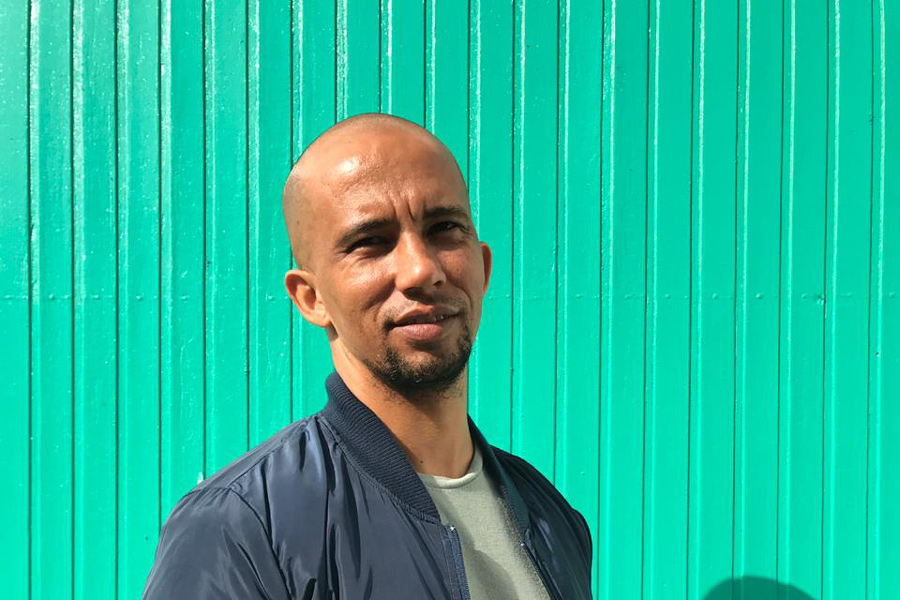
Congratulations to Jacob Cloete who has received his PhD from the Department of Political Studies. Cloete’s research focus on the complexities in the conflict in North and South Kivu in the DRC titled “The Politics of Belonging and a Contest for Survival: Rethinking the Conflict in North and South Kivu in the Democratic Republic of the Congo.” He was supervised by Professor Suren Pillay from the CHR. Cloete’s research abstracts reads as follows:

Bittersoet – A short documentary film by Jacob Cloete

“The Democratic Republic of Congo has long been challenged by a number of complex and protracted conflicts. Stemming from an interest initiated by his experience of being in the Congo as part of the South African contingent of a United Nations peace-keeping mission, Jacob Cloete’s thesis offers an innovative rethinking of the conflict in the North and South Kivu provinces of the Congo. Exploring the making of postcolonial political subjects, Cloete’s timely thesis persuasively argues that the conflict should be understood not as singular, but multiple, not as national, but as regional, and most centrally, not only as resource-driven, but shaped by the reproduction of cultural identities as political identities. The latter, he argues, should be divided into two phases, a politics of becoming, and a politics of belonging. In the politics of becoming phase,  the thesis draws on Critical Theory to make sense of identity formation in a part of the world which experienced a particular form of colonial rule, one that tied indigeneity to territory. And the politics of belonging phase of the thesis illuminates how the question of who belongs was answered in the colonial period in a way that bears heavily on the present and the future of who can belong, as a citizen and a native. Drawing on the extensive historiography of the region, the thesis deftly weaves together an innovative range of sources, including archival materials, visual and diary narratives, policy documents,  social media, and ethnographic knowledge, to offer an importantly nuanced understanding of the making of political identity in the present.  Cloete demonstrates that the importance of the distinction of how those in the Kivu’s describe themselves, first as Banyarwanda, and later as Banjamulenge, brings to the fore the important political consequences for war and conflict in that change in self-description at the local and regional level, particular in relation to Burundi and Uganda. A significant finding of the thesis is how local identities in political conflicts are also shaped by new modes of making community among groups of people with significant diasporas, and how internet chat rooms, and other discursive spaces on social media platforms produce and reproduce narratives that become part of the lived reality of conflicts on the ground. The thesis convincingly concludes that addressing a political conflict requires not just an intervention which halts violence in the short term, but requires interventions which address the more challenging proposition of altering how partisan communities in a conflict narrate their pasts and their futures. In the absence of these interventions, conflicts are more likely to take on the character of cycles of violence, with each new cycle adding a layer of historical memories of injustice and justice to the ongoing tragedy.”

In addition to completing his PhD Cloete also produced and directed a documentary film in 2018 called “Bittersoet” which focuses on rural life in a small town in South Africa. The short documentary film can be easily accessed on Jacob Cloete’s Youtube channel.

Here is the director’s note, Jacob Cloete, on the film:

I was interested in the power relations that present itself in the making of a documentary film. My investigation led me to three limitations regarding documentary film making. These three limitations are: (1) the selectiveness of the frame; (2) the subjective experience of the audience; and (3) the invisibility of the film maker. The question was whether I could resolve these three limitations?

Regarding the selectiveness of the frame I decided to use a still frame as far as I could. In this sense I rather use the frame as a ‘stage’ for performance, rather than a way to document reality. This is because I believe people generally tend to perform the moment they see a camera. Some performances are quite obvious and others are less obvious. Pointing the camera in one direction and framing only one section of reality, gives the subject an opportunity to perform knowing where and when to perform. I like to believe this is a type of contract between you and the subject you are filming. This solves the problem of voyeurism, only when people are aware of the camera and the direction it is pointing. For me panning and moving the camera without people knowing or are aware of it creates unintentional voyeurism. Regarding the subjective experience of the audience I decided to rather engage the subjective nature of the audience rather than trying to frame a desired response from the audience. My hope is that my film will elicit many questions and a range of feelings. When this happens, I know I will have succeeded in engaging the subjective nature of the audience.  Finally, the power relations regarding the invisibility of the film maker I decided to be guided by the following question: Does the image of the human subject take dignity away or does it return dignity? Or differently put: Is this poverty porn? Did I portray the human subjects in the film as helpless in need of charity or did I show their spirit and what they capable of without any appeal to charity? My answers to these questions allowed me to make the film Bittersoet.

However, it might seem as the film reproduces the power relations it tried to escape, or the film-maker tried to escape and in the process rendered the subjects powerless and produces a voyeuristically look at what the film-maker thinks best captures the human spirit or the life of a small rural community. I wanted the film to be less about me and more about the community in which I grew up. It was then I realised that this story was about me. It was about parts of me I would like to tell. The story of Oom Hendrick, Ricardo, the Rieldancers and Josef are all connected to me. It was what I recognised in myself. Their stories are my story and this film was the only way I could tell it. I realised I am telling their story and my story in a way that make sense to me. Therefore, to truly understand Bittersoet you have to understand how I grew up. The hardships and the abuse I experienced while growing up in this community. The music is a result of this hardship. In the music we find a reason for another day. It made life a little lighter, bearable. The music has the same repetition and rhythm as life in the Hardevled. The recent style of Rieldance music is faster than the ‘original’ Rieldance music, which is slower and matches the rhythm of the film. Therefore, Bittersoet is about a rhythm and a spirit I noticed in rural areas. This rhythm is deeply ingrained in the fibre and the psyche of the people. I am a product of it. I might be critique on the ‘voices’ of the people that are not coming through, but I would like to disagree. Gayatri Spivak asked whether the subaltern can speak? My answer, like hers, is: Yes, they can but who is listening? And if you are listening, do you understand what they are saying?
Share
6

Related posts

Barrydale 2025: Steek my Weg Poster

Barrydale 2025: Steek my Weg


Read more

Artwork: Sonya Clark, We Are, 2023.

Exhibition Announcement: Every Artist Must Take Sides – Resonances of Eslanda and Paul Robeson


Read more

Film Screening: MILISUTHANDO


Read more

Good Morning Cape Town with Lester Kiewet: Remembering the Trojan Horse Massacre


Read more

Search

✕ When autocomplete results are available use up and down arrows to review and enter to go to the desired page. Touch device users, explore by touch or with swipe gestures.

Sign Up to our newsletter


Stay up to date with the latest news and developments from the Centre for Humanities Research.


Recent Media

  • ENGAGE/REFLECT/CREATE: The CHR-Encounters Documentary Series
    August 19, 2025
  • Exhibition opening: And I, a newly evolved fish.
    July 25, 2025
  • Holding a Thought – The puppetry of Ukwanda
    July 18, 2025
Centre for Humanities Research

6 days ago

Centre for Humanities Research
Exhibition, 'Every Artist Must Take Sides – Resonances of Eslanda and Paul Robeson' at the Akademie Der Kunste, Berlin in cooperation with the Centre for Humanities Research, 14 November 2025 to 25 January 2026.‘Every Artist Must Take Sides – Resonances of Eslanda and Paul Robeson’, launched on 14 November 2025 at the Akademie der Künste (ADK). The Paul Robeson Archive was founded 60 years ago at the former Akademie der Künste (East) in Berlin. The extensive collection provides an insight into the life and work of Paul Robeson – African-American singer, actor, lawyer and activist – and that of the author, anthropologist, UN correspondent, artist manager and political intellectual Eslanda Goode Robeson. The couple linked the anti-racist struggle in the USA with anti-colonial movements in Africa, Asia and the Caribbean, international workers’ struggles in the spirit of socialist internationalism, and anti-fascist freedom struggles in Europe – such as the Spanish Civil War. The title of the exhibition refers to the latter: a quote from Paul Robeson’s speech at the Royal Albert Hall in 1937 in solidarity with the International Brigades, in which he called for a clear stance against fascism.The artistic works focus on the actualisation of these resistant and relational practices, the role of voice, sound and body, and the questioning of geopolitical constellations between anti-colonial liberation movements and the Cold War. The ideas of international solidarity and universal humanity negotiated therein form the thematic space of resonance in which contemporary artistic works enter into dialogue with the archival materials.With artworks by James Gregory AtkinsonLeila BencharniaSonya ClarkLia Dostlieva & Andrei DostlievaAngela FerreiraMasimba HwatiPatricia kaersenhoutAriel William OrahKirsten ReeseMatana RobertsDread ScottKatharina WardaPhotograph of Sonya Clarke's multimedia installation, We Are (2023) with James Gregory Atkinson's Sohn/Brudet/Vater/Liebhaber/Freund (2023) ... See MoreSee Less

Photo

View on Facebook
· Share

Share on Facebook Share on Twitter Share on Linked In Share by Email

Centre for Humanities Research

1 week ago

Centre for Humanities Research
The CHR and Encounters invite you to a film screening of Milisuthando, on Friday 28 November, as part of ENGAGE/REFLECT/CREATE: The CHR-Encounters monthly screening programme.Date: Friday 28 NovemberVenue: Iyatsiba Lab, 66 Greatmore St, WoodstockTime: 6:00pmSpeakers: Bongani Kona (UWC) and Hankyeol Lee (Editor and sound Design)The event is free but RSVP is essential: centreforhumanitiesresearch@uwc.ac.zaFor more information: ... See MoreSee Less

Film Screening: MILISUTHANDO - The Centre for Humanities Research

www.chrflagship.uwc.ac.za

The Centre for Humanities Research (UWC) and the Encounters South African International Documentary Film Festival cordially invite you to the final session of ENGAGE/REFLECT/CREATE: The CHR-Encounters...
View on Facebook
· Share

Share on Facebook Share on Twitter Share on Linked In Share by Email

Centre for Humanities Research

2 weeks ago

Centre for Humanities Research
Women and Gender Studies Department Anniversary Events: 24 and 25 November, at Iyatsiba LabThe Women and Gender Studies Department, in partnership with the Human Rights Festival, Invites you to two events which mark the Department's 30th Anniversary. Both will take place at Iyatsiba Lab on 24 and 25 November Respectively.Please see attached for more details. RSVP: cdaweti@uwc.ac.za ... See MoreSee Less

Photo

View on Facebook
· Share

Share on Facebook Share on Twitter Share on Linked In Share by Email

Centre for Humanities Research

3 weeks ago

Centre for Humanities Research
Please join us for a guided walkabout by the curators of Tales of History Retold, currently showing at Iyatsiba Gallery until 28 November. Kim Gurney and Carlyn Strydom, the co-curators, will take visitors on a one-hour walkthrough, providing some context to the exhibition and exhibited works. Some of the participating artists will also be present. The first 20 visitors will receive a bespoke zine created for this exhibition project by Scott Eric Williams, in a limited edition, which riffs of the works and the process behind their making.Date: Saturday 15 November 2025Time: 11h00Venue: Iyatsiba Lab, 66 Greatmore Street, Woodstock (entrance on Regent St). Secure parking available.For more info: www.chrflagship.uwc.ac.za/exhibition-opening-tales-of-history-retold/ ... See MoreSee Less

Photo

View on Facebook
· Share

Share on Facebook Share on Twitter Share on Linked In Share by Email

Centre for Humanities Research

4 weeks ago

Centre for Humanities Research
Last night, 'Tales of History Retold' launched at Iyatsiba Lab. Curated by Kim Gurney and Carlyn Strydom, this exhibition invited 8 artists to select artefacts from the document archive of the AVA, as source material for an artistic response. It will be running until 28 November. See the link on bio for more details: ... See MoreSee Less

Photo

View on Facebook
· Share

Share on Facebook Share on Twitter Share on Linked In Share by Email

Research Platforms

  • NRF SARChI Chair in Visual History and Theory
  • Andrew W. Mellon Chair of Aesthetic Theory and Material Performance
  • Factory of the Arts
  • Laboratory of Kinetic Objects
  • Seminar Programme
  • Publications

Recently Added

  • Barrydale 2025: Steek my Weg
    December 2, 2025
  • Exhibition Announcement: Every Artist Must Take Sides – Resonances of Eslanda and Paul Robeson
    November 25, 2025
  • Film Screening: MILISUTHANDO
    November 21, 2025
✕ When autocomplete results are available use up and down arrows to review and enter to go to the desired page. Touch device users, explore by touch or with swipe gestures.

SUBSCRIBE TO OUR NEWSLETTER


Stay up to date with the latest news and developments from the Centre for Humanities Research.


© 2025 UWC | The Centre for Humanities Research. All Rights Reserved. Designed By Spotkolours Design
No results See all results